Warning: The magic method Vc_Manager::__wakeup() must have public visibility in /data01/virt72228/domeenid/www.healthtravelguide.com/htdocs/wp-content/plugins/js_composer/include/classes/core/class-vc-manager.php on line 205

Warning: Cannot modify header information - headers already sent by (output started at /data01/virt72228/domeenid/www.healthtravelguide.com/htdocs/wp-content/plugins/js_composer/include/classes/core/class-vc-manager.php:205) in /data01/virt72228/domeenid/www.healthtravelguide.com/htdocs/wp-includes/feed-rss2.php on line 8
Weight Loss Archives - Health Travel Guide https://healthtravelguide.com/category/weight-loss/ Get first class medical treatment for less! Sat, 02 Sep 2023 06:41:09 +0000 en-GB hourly 1 https://wordpress.org/?v=7.1.4 https://healthtravelguide.com/wp-content/uploads/2020/03/cropped-Health-travel-guide-32x32.jpg Weight Loss Archives - Health Travel Guide https://healthtravelguide.com/category/weight-loss/ 32 32 Top Bariatric Surgery Clinics in the United Kingdom https://healthtravelguide.com/top-bariatric-surgery-clinics-in-the-united-kingdom/ Sat, 02 Sep 2023 06:37:09 +0000 https://healthtravelguide.com/?p=4626 Top 5 Bariatric Surgery Clinics in the UK: Where Expertise Meets Compassionate Care As the demand for bariatric surgery continues to surge across the United Kingdom, selecting the right clinic has never been more crucial. Bariatric procedures, including gastric bypass, gastric sleeve, and gastric banding, are highly effective but require specialized expertise for optimal results.…

The post Top Bariatric Surgery Clinics in the United Kingdom appeared first on Health Travel Guide.

]]>
Top 5 Bariatric Surgery Clinics in the UK: Where Expertise Meets Compassionate Care

As the demand for bariatric surgery continues to surge across the United Kingdom, selecting the right clinic has never been more crucial. Bariatric procedures, including gastric bypass, gastric sleeve, and gastric banding, are highly effective but require specialized expertise for optimal results. Your choice of clinic could directly influence your surgical experience, post-operative recovery, and ultimately, your quality of life thereafter. This article aims to help guide your decision by featuring the top 5 bariatric surgery clinics in the UK based on surgeon expertise, accreditation, patient testimonials, and aftercare services.

Factors to Consider When Choosing a Bariatric Surgery Clinic

When evaluating a bariatric clinic, it’s essential to consider a handful of key elements. These include:

  • Surgeon’s Expertise and Experience: A knowledgeable surgeon can significantly impact your surgical outcome.
  • Accreditation and Awards: The clinic’s certifications provide assurance regarding safety and clinical standards.
  • Patient Reviews and Testimonials: Previous patients’ experiences offer an invaluable insight into what you can expect.
  • Aftercare Services and Support: Comprehensive aftercare can make the difference between a successful long-term outcome and relapse.

Top 5 Bariatric Surgery Clinics in the UK

1. Spire Healthcare

Location(s): Multiple locations across the UK
Highlights:

  • Staffed by highly experienced bariatric surgeons, Spire Healthcare offers a comprehensive range of services from the initial consultation to aftercare programs.
  • The hospital network is highly accredited and garners consistently positive patient testimonials.

spirehealthcare.com

2. Circle Health Group

Location(s): Various locations in England
Highlights:

  • As one of the leading private hospital groups in the UK, Circle Health Group boasts advanced surgical facilities.
  • The clinic also shines in terms of patient outcomes, a factor backed by numerous positive reviews.

circlehealthgroup.co.uk

3. The London Obesity Group

Location(s): London
Highlights:

  • Specializing solely in bariatric surgeries, this clinic offers a uniquely focused and multidisciplinary approach to weight loss surgery.
  • Personalized treatment plans ensure that each patient’s unique needs are addressed.

thelondonobesitygroup.co.uk

4. Nuffield Health

Location(s): Multiple locations across the UK
Highlights:

  • With a long-standing reputation for high-quality healthcare, Nuffield Health offers a patient-centered approach.
  • Pre- and post-operative support is extensive, making it easier for patients to maintain the benefits of their surgery in the long term.

nuffieldhealth.com

5. Streamline Clinics

Location(s): Locations in London and other areas
Highlights:

  • Founded by some of the UK’s most renowned bariatric surgeons, Streamline Clinics stands out for its range of weight loss surgery options.
  • With a strong focus on patient well-being and aftercare support, this clinic ensures a holistic treatment experience.

streamlineweightlosssurgery.com

The Role of Aftercare in Bariatric Surgery Success

In the world of bariatric surgery, the procedure itself is just the first step. The importance of post-operative support cannot be understated, as the first few months following surgery are crucial for setting the stage for lifelong health improvements. Clinics like those listed above offer robust aftercare services that include nutritional counseling, exercise plans, and ongoing medical assessments, contributing to higher patient satisfaction and better long-term outcomes.

Conclusion

Selecting a clinic for your bariatric surgery is a decision that will impact your health and well-being for years to come. The five clinics profiled here stand out for their commitment to surgical excellence, patient-centered care, and comprehensive aftercare programs. However, it is advisable to consult multiple sources and medical professionals before making a final decision. Your path to a healthier future begins with the first step, so make it count.

The post Top Bariatric Surgery Clinics in the United Kingdom appeared first on Health Travel Guide.

]]>
What are the main health risk factors of obesity? https://healthtravelguide.com/what-are-the-main-health-risk-factors-of-obesity/ Thu, 26 Nov 2020 19:22:40 +0000 https://healthtravelguide.com/?p=3920 The post What are the main health risk factors of obesity? appeared first on Health Travel Guide.

]]>

Being overweight is one of the main problems that people face today. This can be due to lifestyle – not exercising enough, consuming too many sweets or just overeating, as well as alcohol and stress. However, obesity can also be caused by various health problems, such as Prader-Willi syndrome, hypothyroidism, Cushing’s syndrome, and so on. There is a lot we can do on our own due to lifestyle obesity. We can monitor more closely what we put in our mouths and combine a healthy diet with appropriate physical activity. This helps us to reduce the level of stress caused by work or other factors.

We may think that the extra pounds won’t bother us, but we shouldn’t turn our back to the health risks of being overweight.

Obesity is associated with the following health problems

Type 2 diabetes

Type 2 diabetes is a chronic disease in which blood sugar is higher than normal. Diabetes is caused by a lack of insulin, weakened insulin, or both. Genetic baggage, lack of exercise, and an unhealthy diet, as well as obesity, play an important role in the development of the disease. Whereas in the past the disease was more common in middle-aged people, now the disease has been observed in more and more young people and children.

Being overweight causes changes in the cells, making them resistant to the hormone insulin. The role of insulin is to transfer sugar from the blood to the cells, where it is converted into energy, but when a person is insulin resistant, the cells are unable to absorb blood sugar, resulting in high blood sugar. In this way, insulin-producing cells have to work even harder and fail over time under heavy load.

Over time, diabetes also causes heart disease, nerve damage, stroke, kidney disease, and vision loss.

Weight loss and physical activity can help you control your blood sugar and prevent or delay the health risks and complications of this form of diabetes

High blood pressure

With each heartbeat, blood is pumped into every part of your body and supplied with oxygen. However, as you gain weight, your body needs more blood to supply oxygen and nutrients to its cells. However, more pressure is needed to get more blood to each cell.

Blood pressure of 120/80 mm Hg is considered normal. If your upper number is consistently 140 or higher and your lower 90 or higher, you have high blood pressure.

High blood pressure due to obesity can lead to various heart diseases, the risk of stroke, and kidney failure.

Weight loss, along with other lifestyle changes, can make a significant contribution to normalizing blood pressure.

Heart disease

Cardiovascular disease is the leading cause of death worldwide. The most common problem is the decrease and narrowing of the elasticity of blood vessels, which prevents the heart from getting the blood it needs.

The main risk factors for heart disease are high blood pressure, high cholesterol, and high blood sugar. Being overweight is an additional risk factor, as being overweight increases the risk of cardiovascular diseases. 

Already 5-10% weight loss can significantly reduce cholesterol, lower blood pressure, and improve blood circulation. The body receives more nutrients, oxygen, and normalizes cell function.

Sleep apnea

The most common sleep-disordered breathing disorder is obstructive sleep apnea. Obstructive sleep apnea is a condition in which there is a partial or complete coincidence of the airways and a “suffocation” effect. The health risks associated with sleep apnea are high blood pressure and problems with the heart muscles, arrhythmias, heart attack, and an increased risk of sudden death.

Obesity is the main risk factor for sleep apnea. Obesity compresses the diaphragm, lungs, and chest cavity and causes difficulty breathing. In addition, excess fat reduces the ability of the airways to expand and stretch and increases muscle relaxation.

Weight loss makes an important contribution to relieving sleep apnea and preventing related problems.

Liver impairment

The liver is the body’s main laboratory involved in the metabolism of proteins, fats, carbohydrates, and other substances. In addition, it performs a protective function, produces vitamin A, accumulates in liver D, K, PP, and other B vitamins.

Obesity also affects the liver and leads to disturbances in the basic functions of the liver. In the worst case, liver damage can be accompanied by cirrhosis of the liver. There is an extremely strong link between obesity, insulin resistance and fatty liver. Fatty liver is up to fifteen times more common in obese people. Even without diabetes, the insulin-resistant liver has higher levels of fat in the liver.

The only way to cope with the disease is to lose weight, exercise, and avoid alcohol.

Kidney impairment

In kidney disease, your kidneys may be damaged and you may no longer be able to filter the blood properly. As a result, residues and toxins begin to accumulate in your body, which in turn leads to various health damage.

Obesity significantly increases the risk of developing diabetes and hypertension, which in turn is directly related to the development of kidney damage. Studies also show that obesity itself causes and accelerates kidney damage.

If you have early-stage chronic kidney disease, weight loss slows the course of the disease and helps your kidneys last longer.

Joint damage or osteoarthritis

Osteoarthritis (or just arthritis) is a joint disease whose main manifestations are pain, joint stiffness, and decreased mobility. It is a chronic disease, the development of which can be influenced by several factors: heredity, lifestyle (unhealthy diet, obesity, etc.). Arthritis cannot be cured.

Studies have shown that excess body fat produces compounds that cause joint damage. Therefore, obesity plays not only a mechanical but also a systemic role in the development of osteoarthritis. Excess weight also has a devastating effect on the peripheral nervous system, causing nerve inflammation, radiculitis, and the like.

Losing weight reduces the risk of developing osteoarthritis, and it also significantly reduces the strain on your knees and lower back.

Infertility and pregnancy problems

Being overweight affects both pregnancy and childbirth and endangers the health of both mother and baby.

The greatest risks during pregnancy are preeclampsia, diabetes, and high blood pressure. There is a greater need for an emergency emperor and blood clots during childbirth.

There are also founded relations between obesity and infertility.

If you are overweight and want to become pregnant or are pregnant, be sure to consult your doctor or specialist to find the best diet and exercise plan that provides the number of nutrients your body needs to ensure good health for you and your baby.

Mental health

Our mental health is affected in many ways, and the social and collective worldview plays a major role here.

Societal norms are also set at an ideal weight. Unfortunately, only in an aesthetic form. In this way, overweight people are often ridiculed by their peers, leading to low self-esteem and often leading to self-isolation. This in turn causes even more emotional eating, depression and self-destructive behavior.

However, mental health is also directly related to our physical health.

Weight loss contributes to the improvement of general well-being – health improves, self-confidence and desire for more sociable activities, sports, grows, we feel motivated and a full member of society.

Our body functions as a whole, and one or another deviation can significantly cause disorders in the functioning of the body or serious health risks and diseases. Thus, being overweight is not just an aesthetic problem that we have learned to live with, but it also poses a great threat to vital organs such as the heart, liver, kidneys, joints.

With less weight, reviewing and adjusting your daily habits will help. In the case of higher predominance, various bariatric operations have proven their effectiveness.

Contact us regarding weight loss surgery


Used sources: 

The National Institute of Diabetes and Digestive and Kidney Diseases
Virtuaalkliinik

Heauni

Diabeet

The post What are the main health risk factors of obesity? appeared first on Health Travel Guide.

]]>
Comprehensible Guide On Gastric Bypass https://healthtravelguide.com/comprehensible-guide-on-gastric-bypass/ Mon, 20 Apr 2020 19:46:34 +0000 https://healthtravelguide.com/?p=3376 The Most Efficient Way to Reduce Your Excess Body Weight Up to 80% – A Comprehensible Guide On Gastric Bypass Being overweight and obese inevitably has a significant impact on your life and on the lives of people around you. You’ve probably repeatedly found yourself thinking about: Things that haven’t been done due to poor…

The post Comprehensible Guide On Gastric Bypass appeared first on Health Travel Guide.

]]>
The Most Efficient Way to Reduce Your Excess Body Weight Up to 80% – A Comprehensible Guide On Gastric Bypass

Being overweight and obese inevitably has a significant impact on your life and on the lives of people around you. You’ve probably repeatedly found yourself thinking about:

  1. Things that haven’t been done due to poor health and being out of shape;
  2. Or things that have become extremely frustrating. 

And unfortunately, this list is long.

Maybe you want to get married, but being overweight hasn’t given you the chance to wear the wedding dress of your dreams…

Maybe you’ve wanted to travel the world more, but tight airplane seats and interior makes traveling extremely uncomfortable for yourself and others…

Maybe you’ve wanted to wear your favorite clothes that you bought a long time ago, but you still haven’t been able to wear them because they don’t fit you anymore or you wouldn’t feel confident in them at all…

Or it’s just that you want stairs or lacing up your shoelaces to be no longer a nightmare, but something you can do with ease.

This list can go on and on. Sounds familiar?

Whether or not your wish was on this list, there is a much faster, safer, and more effective way to start chasing it than starting another fancy-named diet or going to the gym a few times to give it up again next week because of the absence of quick results.

And the much faster and efficient way to achieve those fore-mentioned goals is the gastric bypass surgery, also known as Roux-de-Y.

Behind The Scenes of the Gastric Bypass

Roux-de-Y gastric bypass surgery is considered as the golden standard for weight-loss surgeries. Although there are different types of bariatric surgeries, according to studies and experience, this type of weight-loss surgery has proven to be the most effective.

As a result of gastric bypass surgery, patients have experienced a 10-17% greater weight loss (1) over a 4-year period compared to some other bariatric surgeries, such as adjustable gastric banding, or sleeve gastrectomy. Therefore, it’s also the most popular bariatric surgery.

Gastric bypass surgery is performed under general anesthesia and it can be done in two different ways:

  1. Using a traditional method, where during the open surgery, the abdominal cavity is opened with a cut of 15-30 cm;
  2. Using the laparoscopic method, in which special instruments are inserted into the abdominal cavity through small openings and the process is viewed with a thin telescopic instrument (the common method).

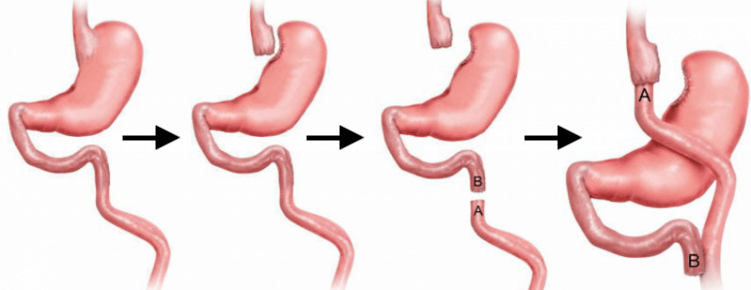
During the operation, the upper tiny part is removed from your stomach by stapling or with a vertical band, forming a stomach pouch with a capacity of about 30 ml (i.e. your new stomach) attached to your esophagus. A small intestine, which would regularly “come” after the stomach itself, is attached to the new, formed stomach. As a result of this procedure, food is going to move past the stomach and duodenum.

However, if this brief explanation was a bit confusing for you (which is totally fine!), the following figure definitely helps to visualize the previous story a lot better.

Gastric-bypass-step-by-step-1
Figure 1. The steps of the gastric bypass surgery.

And that’s how simple (or yet complicated?) it is.

Here are some other essential features about gastric bypass you should be aware of:

  • Duration of the surgery: 1-3 h (usually approx. 1.5 h)
  • Hospital stay: 2-4 days
  • Potential weight loss: 70-80% of excess body weight
  • Gastric bypass surgery is reversible (!)
  • Sick leave: 2 weeks
  • Anesthesia: General anesthesia

Also keep in mind that in order to be fully prepared for this new, life-changing journey, you need to start following personal nutrition and exercise plans given by the clinical nutritionist already weeks before the operation itself. 

A Remarkably Easier Life Becomes Your New Reality

Now that the surgery is successfully completed, the real weight loss journey only begins. That means it also requires you to be determined and committed. However, you can count on the facts that as a result of gastric bypass surgery and your own contribution:

  • Your life expectancy is significantly longer (2) and the quality of your life is a lot better (hell yeah!);
  • Your new stomach holds much smaller amounts of food, which reduces the number of calories consumed. Fewer calories consumed = greater weight-loss;
  • Redirecting the food stream causes changes in gut hormones, which:
    • Promotes a feeling of fullness;
    • Suppresses hunger.
  • The potential loss of excess weight is 70-80% (!);
  • Your self-esteem is higher and you are far more confident in everything you do.

To calculate your potential 1-2 year weight loss based on your current weight, you can use this simple formula:

(current weight – ideal weight) x e.g. 70% = potential weight loss

EXAMPLE. The patient weighs 140 kg before surgery and is 178 cm tall. However, their ideal weight at a weight index of 25 kg / m2 is 80 kg. So the calculation should look like this:

(140 – 80) x 70% = 42 kg

In other words, as an average patient, their weight loss after the surgery (assuming that the patient has also followed the nutrition and exercise plans properly) is expected to be 42 kg. It means that their new weight should be 140 kg – 42 kg = 98 kg. (Instead of 70%, you can use 80% or a lower percentage in the formula – think what could be the result you would be able to achieve.)

Gastric bypass also provides a solution to a number of diseases that tend to affect obese people the most:

  • Type II diabetes,
  • Ischemic heart disease,
  • Hypertension (high blood pressure),
  • Sleep apnoea (temporary suspension of breathing occurring during sleep),
  • Joint diseases,
  • High cholesterol;
  • A condition following a heart attack or stroke,
  • Polycystic ovary syndrome.

So if even one of these diseases or health conditions prevents you from living and enjoying your life to the fullest, gastric bypass might be the “magic pill” you need.

Potential Risks to Consider with Gastric Bypass

As mentioned before, the gastric bypass is the golden standard for weight-loss surgeries. But in addition to the significant positive features, there are still some inconveniences and risks to consider as well:

  • Due to nutrient and vitamin deficiencies, supplements and vitamins must be taken daily (especially vitamins D and B12, iron, calcium, and other trace elements).
  • Dumping syndrome (3) – often when eating sweet or high-fat foods (especially when eating and drinking at the same time), food can rush through the small intestine too quickly, drawing fluid with it. It can cause nausea, diarrhea, dizziness, and cramping pain. However, this syndrome occurs in only 10% of patients.
  • Eating large amounts or eating fast can lead to nausea, abdominal pain, and vomiting.
  • Because it is a more technically complex operation, postoperative bleeding and ulcers may occur.
  • The risk of major complications is low (approx. 2%).
  • Surgery-related mortality is also low (approx. 0.13%).

You can find out more about possible major and minor complications for example from the guide made by the Bariatric and Metabolic Institute of Cleveland Clinic.

Your Fridge Will Also Go Through an Extensive Makeover

Unfortunately, the completion of the gastric bypass doesn’t mean that you can eat everything you want right after the operation.

In the first weeks, the recovery diet is based on liquids, purees, and other soft foods. All of this is necessary to let your stomach recover as painlessly and smoothly as possible and your body has time to adapt to new and healthy eating habits.

So you have to wait a bit before you can move back to the regular food. Initially, your menu will include soups, broths, and juices, which will be gradually followed by pureed foods. It’s important that the food doesn’t contain pieces that could put a strain on the “freshly tuned” digestive tract.

After a few weeks, you can move on to softer foods, such as boiled vegetables, scrambled eggs, soft and juicy lean meat, porridges, etc. It takes about three months to reach solid food.

You can definitely get a thorough overview of both the potential menu and exercise habits for example from the Healthline’s article “Your Guide to the Gastric Bypass Diet”, but the final menu and training plan will be created personally according to your body, habits, and lifestyle during a consultation with a specialist.

It’s also worth noting that carbonated drinks, especially alcoholic beverages, are not allowed after the surgery. Alcohol is high in calories but provides your body with a minimal amount of valuable nutrients. To put it into context, basically, it’s like pouring soda into the car’s gas tank – it takes up space, but it’s useless.

However, according to studies, because of the new digestive system, alcohol is no longer so much in contact with the parts of the digestive tract that were previously involved in the absorption of alcohol. 

This leads to a situation where alcohol stays longer in your body, getting sober takes longer too and the risk of becoming dependent on alcohol increases, which also leads one step closer to depression and other physical and mental disorders.

Is Gastric Bypass the Right Fit for You?

Roux-en-Y gastric bypass can be the starting point for your healthier life if you are obese (not overweight!) or if you have an obesity-related illness (such as diabetes, sleep apnea, hypertension, arthritis, etc.) that would ease or even disappear after the weight-loss surgery.

People are often confused about being overweight and obese, so if you have a beer belly from barbecue nights or some nice jeans you bought some time ago, don’t fit you anymore, you have no reason to rush to a weight surgeon right away.

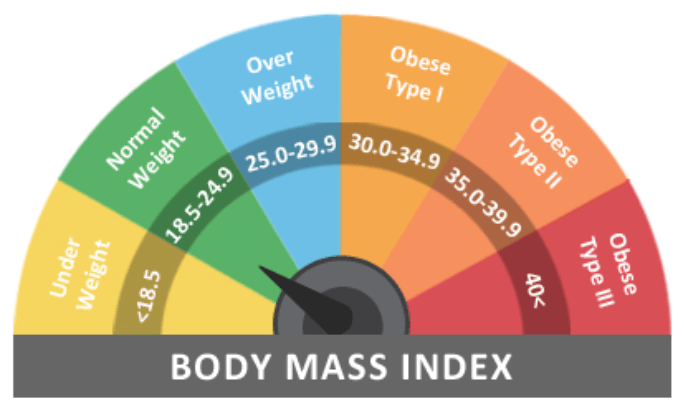
Bariatric surgery (including gastric bypass) should be considered with a body mass index (BMI) of 30 kg / m2 or more. In order to determine your body mass index and thus make sure that this surgery is suitable for you, you can take a quick test now.

If you already know your numbers, take a look at this chart and ascertain, to which category you’d belong to with your result:

Body-mass-index-chart
Figure 2. The body mass index chart.

Obesity-related diseases should also be taken into account when assessing the suitability of the gastric bypass surgery. For example, if your BMI is 31, but you suffer from high blood pressure, it would be wise to consider the surgery. But if you don’t have any diseases, the surgery might not be necessary. Yet.

However, if your BMI has reached 40 or more, it is vital to consult a doctor and find the best possible weight-loss surgery for you.

Another intriguing fact is that gastric bypass is almost two times a safer way to lose weight compared to simply modifying your lifestyle with a rapid and intense change.

According to a recent study in Sweden (4), involving 40,000 patients, obese people who tried to lose weight independently by drastically changing their lifestyle and eating and exercise habits instead of going for the surgery, had a higher risk of heart failure.

The weight loss results of the same study can’t be ignored either. Patients who underwent gastric bypass surgery experienced around 20 kg greater weight loss over the first few years than their “competitors”.

You Have Already Paid the Highest Price

Before getting to the numbers, how much a weight-loss surgery could cost, it’s worth reminding that regardless of the price of the surgery, the highest price has already been paid – it’s your health.

Although no price tags are attached to people, the fact is that the most precious asset a human can have is their health. When health is poor, absolutely all other areas of life suffer as well. I bet you know what I mean.

Because the highest price has already been paid in the form of health problems, limitations, unfulfilled dreams, and inconvenient situations, it is a much cheaper way to help improve your life quality through gastric bypass surgery.

The good news is that even though the quality of medicine in Estonia is on the same top-notch level as in other top clinics in the world, you don’t have to pay $10,000 to $25,000 to our partners in Estonia as it is common in other European countries or in the United States.

We guarantee you top quality and the best pre- and post-operative service for only 5,950€ (around $6,500). In addition to the tens of thousands of dollars saved, the best part of it is that this amount covers literally everything: all the consultations, surgery itself, transportation between airport/hotel and the hospital, tests, instructions for the post-surgery period, support via e-mail and phone for 5 years after surgery, and so much more.

One Little “But”…

Even though gastric bypass is indeed a very effective weight-loss surgery, it’s unfortunately not enough for complete results – the greatest contribution and effort is required from you.

You’ve probably noticed that if you order an expensive training and nutrition plan, but never go to the gym and continue on the paths of old eating habits, your weight will not fall in any way. Therefore, it’s extremely important that you are ready to actively strive for a better life and health after the surgery, too.

However, it’s not that rare at all – in fact in about 50% of patients – that a person who has undergone surgery gains the weight back in a few years, but usually for about 5% of it. The good news is this weight gain can also be avoided by not slacking the diet and lifestyle plans set by your surgeons and following the guidelines in an excellent manner.

So before making that decision, you have to both figuratively and literally look in the mirror and think, am I truly ready for this journey to a better, easier, and happier life.

No extraordinary achievement in this world has been born by sitting on the sidelines – you have to take control into your own hands. I know you’re 100% capable of that.

The Most Important Question

Now that you’ve got a clearer picture of what a gastric bypass surgery is, what are the good (or not so good) things about it, you’ve probably come to the conclusion in your head whether or not it might be something for you.

Probably if you’ve read this far, your life has become much more complicated due to your overweight than you might have imagined a few years ago.

If you were asked what haven’t you been able to do in your life due to your current weight and health, I believe that the list can be quite long. Maybe you already have some frightful situations and unfulfilled dreams in your mind at the moment. I know – this feeling is not pleasant.

As we have helped hundreds of obese people to a better and happier life with our team, I’m sure your success story will be at least as amazing. We are ready to use our best knowledge and skills to make your journey to an easier and happier life as smooth as possible.

So, to turn your dream into reality, I have one last question – when will we meet?

P.S. Be sure to take a look at the testimonials of people, just like you, who have already had their successful surgeries – it’s a truly inspirational and heart-warming reading.

Sources

Maciejewski, M. L., Arterburn, D. E., Scoyoc, L. V., Smith, V. A., Yancy, W. S., Weidenbacher, H. J., … Olsen, M. K. (2016). Bariatric Surgery and Long-term Durability of Weight Loss. JAMA Surgery, 151(11), 1046. doi: 10.1001/jamasurg.2016.2317

Schauer, D. P., Arterburn, D. E., Livingston, E. H., Coleman, K. J., Sidney, S., Fisher, D., OʼConnor, P., Fischer, D., & Eckman, M. H. (2015). Impact of bariatric surgery on life expectancy in severely obese patients with diabetes: a decision analysis. Annals of surgery, 261(5), 914–919. https://doi.org/10.1097/SLA.0000000000000907

Ukleja, A. (2005). Dumping Syndrome: Pathophysiology and Treatment. Nutrition in Clinical Practice, 20(5), 517–525. doi: 10.1177/0115426505020005517

Sundström, J., Bruze, G., Ottosson, J., Marcus, C., Näslund, I., & Neovius, M. (2017). Weight Loss and Heart Failure. Circulation, 135(17), 1577–1585. doi: 10.1161/circulationaha.116.025629

The post Comprehensible Guide On Gastric Bypass appeared first on Health Travel Guide.

]]>
6 Tips for Long-Term Maintenance of Weight Loss https://healthtravelguide.com/6-tips-for-long-term-maintenance-of-weight-loss/ Fri, 10 Jan 2020 09:17:00 +0000 https://healthtravelguide.com/?p=3333 You had weight loss surgery, cruised through the “honeymoon” phase of your weight loss journey in the first twelve to eighteen months after surgery, and now face the reality of maintaining and managing your weight loss amidst life’s constant stressors. Your weight loss surgery has provided you with a tool to lose weight, however, the…

The post 6 Tips for Long-Term Maintenance of Weight Loss appeared first on Health Travel Guide.

]]>
You had weight loss surgery, cruised through the “honeymoon” phase of your weight loss journey in the first twelve to eighteen months after surgery, and now face the reality of maintaining and managing your weight loss amidst life’s constant stressors.

Your weight loss surgery has provided you with a tool to lose weight, however, the cultivation of healthy habits before and during the first 12 to 18 months after surgery proves to be the most crucial in building a strong foundation for long-term success and weight maintenance.

The Challenge of Long-Term Maintenance

Research establishes “long-term weight maintenance is even more challenging than following the initial weight loss…[and] many formal weight loss programs report that dieters frequently regain weight three to five years after they achieve their weight loss goals”.

Individuals who successfully maintain their weight loss state that “paying careful attention to all aspects of behavior modification is necessary for long-term weight management…[to] detect and correct small amounts of weight gain before weight escalates and becomes unmanageable”.

So when should you re-evaluate your habits?  Though the scale proves helpful for monitoring weight loss, it only gives you limited information due to body fluctuations. Focus on how your clothes are fitting, how are your energy levels throughout the day, and how positive your mindset remains are healthier and more sustainable methods to maintain weight loss long-term.

When you experience external stressors and feel as though one (or more) of these internal components begin to disengage and get off-balance, take a moment to step back, re-evaluate daily habits, and get back to the basics. Another helpful strategy for long-term maintenance is to keep track of your food and fitness.

6 Tips for Long-Term Maintenance

PLAN AHEAD:  Take control of what you do have control over and stay proactive.  When unexpected events and scenarios bombard us, we continuously have the option to remain in charge of our health by committing a fraction of our time and energy to cultivate habits within our abilities.

1.  Plan for your trip to the grocery store.  Take 15 minutes before going to the grocery store to sit down and plan meals and snacks for the week. When making your grocery list, focus on the outer perimeters of the grocery store (fresh produce, lean meats, eggs, and low-fat dairy products).  Research proves that grocery lists “may be effective interventions for facilitating healthier diets, and for promoting weight loss among overweight and obese individuals”.

2.  Plan your fitness.  Schedule exercise into your week. The general recommendation is “30 to 60 minutes of physical activity each day to prevent weight gain and 60 to 90 minutes of physical activity to prevent weight regain”. Focus on more movement and more consistency not only for weight management but for improved mental clarity and outlook as well.

3.  Plan for the surprises of life to stay in control.  Regardless of our efforts, stressors will come and go with the natural ebb and flow of our private and professional lives. Whether our stressors currently reside in the ebb (“outgoing”) phase or the flow (“incoming”) phase of our life, persistence with efforts to plan ahead must remain consistent overall, not only to maintain weight loss but to also maintain our invaluable physical and mental health long-term.

GET MOVING:  Now that we constructed a plan, move forward to act on it!  Remain intentional not only by constructing a plan but with your follow-through too.  Forbid any disconnect between setting your plan and putting your plan into action.  Focus on establishing your intentions each day and setting small priorities to allow consistency with dietary intake, physical activity, and mental clarity.

4.  Get moving for your meals by food preparation. After unloading the groceries, take a moment to rinse and chop vegetables, cook a few lean proteins, and prepare the majority of fluids, meals, and snacks for the week. Spending a few extra moments once a week to prepare or freeze foods ahead of time will aid in minimal preparation throughout the week as well as accountability to make healthier choices.

5.  Get moving by scheduling your fitness as a set appointment. Create a workout schedule around your work and home life schedules. Whether implementing movement first thing in the morning fits your schedule best, or having a family workout in the evening, incorporate what is most conducive to your schedule, and focus on activities you enjoy.

6.  Get moving in your life by staying focused on overall health.  Maintaining positive mental health is important for long-term weight loss success. Finding hobbies, or non-food alternatives, to aid in stress management and maintenance of a positive outlook remains important for optimal health overall.

The HAES (Health at Every Size) Approach focuses on healthful behaviors primarily, before weight loss, including “eating a healthful diet…physical activity, getting the proper amount of sleep, stress management, finding the joy in life, and intuitive eating”, all of which are vital components required together to maximize our overall health.  These behaviors focus on lifestyle management as the ultimate goal.  Several studies have recently shown how this approach “positively affects eating behaviors and appetite”.  The HAES approach should not be mistaken as an excuse to let loose with our habits, but rather offer a holistic approach regarding how to maintain optimal health, through maintaining weight loss long-term after bariatric surgery.

Contact Us Now

Sources:

TodaysDietitian

ObesityHelp

Nature

The post 6 Tips for Long-Term Maintenance of Weight Loss appeared first on Health Travel Guide.

]]>
The Secret to My Weight Loss Surgery Success https://healthtravelguide.com/the-secret-to-my-weight-loss-surgery-success/ Thu, 08 Aug 2019 20:29:32 +0000 https://healthtravelguide.com/?p=3185 I’m officially six years post-op on September 19, 2019. As I reflect back, things are way different than they were just a short two years ago. But for the most part, my choices keep me accountable and are helping me keep my weight off. I didn’t have any magical surgery so my success is not…

The post The Secret to My Weight Loss Surgery Success appeared first on Health Travel Guide.

]]>
I’m officially six years post-op on September 19, 2019. As I reflect back, things are way different than they were just a short two years ago. But for the most part, my choices keep me accountable and are helping me keep my weight off. I didn’t have any magical surgery so my success is not blind luck. There isn’t a one size fits all approach to a successful post-op way of life, but I’ve found that there is ONE key ingredient in the recipe for success. The secret to my weight loss surgery success is…..Counting.

Contact Us Now

Options of Ways to Eat as a Bariatric Post-Op

When it comes to eating, some choose to count calories, some choose to count carbs, some track protein. A friend of mine tells me that she maintains her weight because she stops eating when she’s full. That is what works for her.  She counts the number of bites that she eats. (I wish I could do that!)

Another friend eats what she wants and keeps her weight in a specific zone with lots and lots of running. She counts the number of miles that she runs weekly. The only things that’ll make me run are stray dogs, spiders, and shoe sales. But, I don’t get to say that it doesn’t work only because it doesn’t work for me.  It works for her and that is what matters.

An important part of my success is knowing that works for me and knowing what I’m willing to do or not do to maintain my health and wellness.

So let’s talk about what I do.  I’m approaching six years out and during this time, I’ve opted to follow a lower carb, liberal fat, and protein diet. I’ve chosen this way of eating because, for me, it removes the stress of counting and logging everything that I put in my mouth. Since I eat from a limited group of foods, as long as I stick with this group of foods, I’m able to maintain my weight loss successfully!

Although I say it’s limited, it’s only as limited as my imagination and creativity. I opt of out white starches like rice, potatoes, and bread, but I’ve opened my palette to a staggering array of vegetables and various cuisines.

Did you know that you can eat butternut squash raw? Have you ever tried Gomen Besiga, an Ethiopian dish composed of greens and cubes of beef? Another favorite of mine is Cobb salad, partially composed of two of the most delicious foods in the world, bacon and cheese, fits right into my post-op way of eating.

Importantly, my surgeon fully supports this way of eating.  Based on my exact weight this morning, I’m maintaining 88% of my total weight loss. That’s not so bad for being six years post-op and six years older.  Also important are other values to count – my cholesterol, my A1C and blood pressure are all within normal ranges.

Life Happens – I Prefer to Stay on the Train Rather Than Jump Off

I’m not afraid to switch things up and be flexible if my eating norm of low carb isn’t feasible for whatever reason. For example, this week because I’m making baked goods for a parent conference at my school, I’m switching to logging my calories via the MyFitnessPal app.

Instead of having a “screw-it-all-low-carb-can-go-to-hell-cause-baked-goods-are-delicious’ moment, I have chosen to have a backup plan here.

I’m going to use a falling off of the wagon analogy here. If you’re trying to get from point A to point B, isn’t it easier to stay on the train and just move to another car if the car that you’re currently in just doesn’t vibe with you? Why jump off!? I’d much rather be on the train than on the ground watching the train speed away without me.

This week is the exception rather than the norm and by and large, I do not count carbs, calories, steps, miles, points, amounts of food. I don’t count any of those things. I’m kind of aware of the amounts, but being aware of amounts is estimating. Counting is quite exact.

Putting the “Count” in Accountable for Weight Loss Surgery Success

So if counting is part of bariatric success, what is it that I count? I count myself. Every single day, whether I’ve had a “good” day full of protein and veggies or a weekend full of brunches and mimosas, I brave that scale every single morning.

Honestly, there are days when the number on the scale has made me less than happy, but on the grand scale of life “less than happy” is not quite the same as devastated. Putting my head in the sand about my weight got me to a weight that was so high with a number that was SO big it rang around in my head for days. That’s devastating. Being peeved about a three-pound weight gain might make me grumpy for a little bit. I can live with that but I cannot live with a BMI of 53.

I do not claim that daily weighing can keep me from gaining weight, but it might keep a 5 kg gain from being a 10, 20 or more. Success is not solely determined by keeping every last kilogram off. Success also includes measuring your resting heart rate, your mobility, or even moments that you’re able to share with people you love.

From my personal experiences and the experiences of those around me, if you want to be a bariatric success you have to count something every single day. Count your calories, count your steps, count your food grams, count your carbs, count your portions, count your miles, count your bites, count yourself. It doesn’t hurt to count your blessings either.

Contact Us Now

This article is published on ObesityHelp. Read about the authors and original article here.

The post The Secret to My Weight Loss Surgery Success appeared first on Health Travel Guide.

]]>
You Gained Some Weight …Four Simple Steps to Get Back on Track! https://healthtravelguide.com/you-gained-some-weight-four-simple-steps-to-get-back-on-track/ Fri, 01 Feb 2019 20:25:59 +0000 https://healthtravelguide.com/?p=2546 For bariatric patients, the weight loss battle does not end in the operating room. Months or even years after surgery, the weight can slowly creep back on. This setback can be both frustrating and discouraging to people who thought their weight loss issues were a thing of the past. Truthfully, it happens to most of…

The post You Gained Some Weight …Four Simple Steps to Get Back on Track! appeared first on Health Travel Guide.

]]>
For bariatric patients, the weight loss battle does not end in the operating room. Months or even years after surgery, the weight can slowly creep back on. This setback can be both frustrating and discouraging to people who thought their weight loss issues were a thing of the past.

Truthfully, it happens to most of us. If you are dealing with weight gain, we’ve listed a few steps below which will help you get back on track.  But these are only a few ideas, leave your comment to share your recommendations and tips!

1. Return to what your doctor ordered

Post-surgery, you were probably given a lot of instructions from your surgeon as to what, when and how to eat and were reminded of the importance of exercise and follow-up medical care. While in the beginning, you might have followed the doctor’s advice to the letter, as time passed and you looked and felt healthier, you may have deviated from those dietary and exercise guidelines.

Those instructions were not only designed to ensure a safe recovery but were part of a long-term strategy to help you reap the benefits of weight loss surgery for the rest of your life.

In fact, closely following your surgeon’s orders may be the secret to your post-surgery success.

2. Get yourself to the nearest support group STAT

Weight loss is a personal journey, but it doesn’t have to be a lonely one. Groups are great ways to share your weight loss challenges and successes with a network of people who can sympathize with what you are going through. These groups can also improve your self-esteem by helping you to recognize that your feelings and behaviours are not unique and nothing to be ashamed of. Talk to our friendly staff at HealthTravelGuide, we are proffessionals and love to help!

3. Mind your exercise

Are you using the ‘too tired’ reason for missing a trip to the gym or 30-minute fast walk around the neighborhood? If you need energy, you know how to get it–get up, get out, get moving.

“Too busy,” you say? Remember, only you can prioritize your health and wellness. You matter–make time for your health every single day.

4. Hold yourself accountable

This doesn’t mean blaming yourself for putting the weight back on. It means being forthright about how and why you’ve gained the weight. Both a scale and firing up your food journal again can help you with that.

Weigh in at least once a week you will be forced to face the hard fact that you are gaining weight and you will be more likely to break the bad habits that are causing it. Keeping a food and activity diary, through an app on your phone or even track it with paper and pen. It will give you accountability for your weight gain by helping you to track your daily food intake, count your calories and keep a log of your daily activity.

There’s no need to beat yourself up. You have already done the hard part by recognizing the weight has crept back on. That in itself shows you are going to battle back! If you need a pep talk or have some challenges you help with overcoming–call your bariatric surgeon or nutritionist and schedule an appointment. We are here, armed with the ammunition to get the scale moving downward again.

You may also enjoy our article about 8 Tips To Getting Rid of Bad Habits After WLS.

Contact Us Now

This article is written by Dr. Seun Sowemimo and published on ObesityHelp. Read about the author and original article here.

The post You Gained Some Weight …Four Simple Steps to Get Back on Track! appeared first on Health Travel Guide.

]]>
Inspirational – WOW Moments After Weight Loss https://healthtravelguide.com/inspirational-wow-moments-after-weight-loss/ Fri, 09 Nov 2018 20:01:32 +0000 https://healthtravelguide.com/?p=2531 WOW moments! Congratulations to all of these amazing people who have shared some of their favorite WOW moments with us. You have worked so hard to lose and maintain your weight loss. You deserve these Wow moments and many more in the years to come. We’re so proud of you! WOW Moments After Weight Loss!…

The post Inspirational – WOW Moments After Weight Loss appeared first on Health Travel Guide.

]]>
WOW moments! Congratulations to all of these amazing people who have shared some of their favorite WOW moments with us. You have worked so hard to lose and maintain your weight loss. You deserve these Wow moments and many more in the years to come. We’re so proud of you!

WOW Moments After Weight Loss!

My underwear fell down inside my shorts at Walmart! Fortunately, my shorts were big enough that I could reach down and pull my undies back up again (I made sure no one was looking!).- Julie L.

Last 4th of July at a family party my hubby was looking for me and he said to his brother, “After 31 years I didn’t recognize my own wife!” Usually, you could always find me by my size and a big frame and now I guess I blend in more.- Judy R.

My girlfriend was walking behind me the other day and actually grabbed my backside. I can’t believe that I actually have cheeks now, WOW!- Steve D.

The other night I had my hands full of stuff and I was going upstairs. I was wearing my pj’s and my pants fell off me as I was going up the stairs! I couldn’t pull them up because of all the stuff I had in my hands.- Crystal B.

My WOW moment was when I sat down in the movie theater with both arms up and just slid in. I had plenty of wiggle room. It felt wonderful!-Shannon G.

My 16-year-old son, John, walked up to me and picked me up. He was so excited that he kept trying to lift me higher and higher!- Julie L.

I was sure someone had driven my car and moved my rear view mirror. I then realized that I was actually sitting lower in my seat because I lost weight in my rear-end.- Chris N.

My husband and I wanted to run to the store, meaning he drove and I ran in for a few things. Well, as I was relaxing at home prior to this, I threw on some old pants that were elastic, not thinking about it. When I came out of the store it had started to rain, so I ran to the car to stay dry. The pants I had on had fallen down to my knees by the time I got to the car. My husband was laughing hysterically, and all he could say was, “Well, that would have never happened before the Lap-Band.”- Theresa G.

I went on a date a couple of weekends ago and he started tickling me, and I actually was ticklish. Almost painfully ticklish. He could tickle my bones, lol — never before was I honestly ticklish before. The other thing that really amazes me is how I was invisible before to strangers, and now they send me a smile. Maybe it’s because my confidence level has increased, but hey, whatever it is, I’ll take it.- Luanne

Want to have your own inspirational story to share?

Contact Us Now

Health Travel Guide offers a cost-effective solution to your weight loss goals. With world-class service and an experienced team of doctors and surgeons, we strive to deliver the best travel medical service. For more information, contact us today! Lose the weight, take back control, and start creating the life you have always wanted to.

This article was originally published at ObesityHelp.


The post Inspirational – WOW Moments After Weight Loss appeared first on Health Travel Guide.

]]>
Let’s talk about obesity https://healthtravelguide.com/lets-talk-about-obesity/ Tue, 14 Aug 2018 11:22:58 +0000 https://healthtravelguide.com/?p=2340 What is Obesity? Though we all use the terms “fat” and “obese” casually in conversation, there is a medical definition of the condition and yes, obesity is considered a health “condition.” “Obesity” specifically refers to an excessive amount of body fat. “Overweight” refers to an excessive amount of body weight that includes muscle, bone, fat,…

The post Let’s talk about obesity appeared first on Health Travel Guide.

]]>
What is Obesity?
Though we all use the terms “fat” and “obese” casually in conversation, there is a medical definition of the condition and yes, obesity is considered a health “condition.”

“Obesity” specifically refers to an excessive amount of body fat. “Overweight” refers to an excessive amount of body weight that includes muscle, bone, fat, and water. As a rule, women have more body fat than men. Most health care professionals agree that men with more than 25 percent body fat and women with more than 30 percent body fat are obese. These numbers should not be confused with the body mass index (BMI), however, which is more commonly used by health care professionals to determine the effect of body weight on the risk for some diseases.

How is Obesity Measured
Measuring the exact amount of a person’s body fat is not easy. The most accurate measures are to weigh a person underwater or in a chamber that uses air displacement to measure body volume, or to use an X-ray test called Dual Energy X-ray Absorptiometry, also known as DEXA. These methods are not practical for the average person, and are done only in research centers with special equipment.

There are simpler methods to estimate body fat. One is to measure the thickness of the layer of fat just under the skin in several parts of the body. Another involves sending a harmless amount of electricity through a person’s body. Results from these methods, however, can be inaccurate if done by an inexperienced person or on someone with extreme obesity.

Because measuring a person’s body fat is difficult, health care professionals often rely on other means to diagnose obesity. Weight-for-height tables, used for decades, have a range of acceptable weights for a person of a given height. One problem with these tables is that there are many versions, all with different weight ranges. Another problem is that they do not distinguish between excess fat and muscle. According to the tables, a very muscular person may be classified obese when he or she is not. The BMI is less likely to misidentify a person’s appropriate weight-for-height range.

Contact us to get started with your own weight loss journey!

Contact Us Now

The post Let’s talk about obesity appeared first on Health Travel Guide.

]]>
8 Tips To Get Rid of Bad Habits After WLS https://healthtravelguide.com/8-tips-to-get-rid-of-bad-habits-after-wls/ Mon, 30 Jul 2018 10:33:22 +0000 https://healthtravelguide.com/?p=2276 The unthinkable has happened – bad habits have crept back in. The very things you thought you would never do, you find yourself doing again. You swore off the desserts. You said never again to fast food. You told everyone that you would never go back. Then life happened. The kids still have too many…

The post 8 Tips To Get Rid of Bad Habits After WLS appeared first on Health Travel Guide.

]]>
The unthinkable has happened – bad habits have crept back in. The very things you thought you would never do, you find yourself doing again. You swore off the desserts. You said never again to fast food. You told everyone that you would never go back.

Then life happened. The kids still have too many commitments. Your job is demanding and your family looks to you for what to eat at the end of a long day. When things get busy in life, the first thing that usually goes out the door is healthy eating and your overall self-care. No one is counting on you to take time for yourself! They are counting on you to take care of them. Thus, the habit of grabbing food and rushing through your day comes back in full force. It happens to the best of us!

The key to finding the balance between work, family, and health is to never stop trying. Friend, do not beat yourself up if this “unthinkable” and completely normal experience of bad habits creeping back in is starting to get the best of you.

If there is air in your lungs, it is not too late to get back on track.

8 Tips To Getting Rid of Bad Habits

You want to let go of those habits but aren’t sure how to do it? You can use these 8 tips to let go of those bad habits and move forward with healthy habits!

1.  Re-ignite your motivation:  What is the carrot that drives you to keep moving forward?  If you have a beautiful tropical vacation coming up, you’re more likely to stick to your budget to save money for your beach days. The ocean is calling your name and the carrot is dangling before you. Perhaps the motivation that brought you success in the past is still what will light that fire now.

On the other hand, that carrot may not motivate you in the same way, and you need to find a new motivator to spur you on. Ask your post-op friends how they stay focused. Sit down in a quiet room and spend some time with yourself to identify what reasons you have for getting back on track. For some, it will be fitting into clothes comfortably again. For others, the carrot may be to get to get off (or decrease) diabetic medications. What is it for you?

What is the carrot of motivation for you?

2.  Set a realistic plan:  Once you’ve identified your carrot it’s time to make a realistic plan to get back on track. Your realistic plan should include meal planning. Planning ahead for your busy day will ensure you eat the best foods for yourself and keep your blinders up when temptations come lurking. We’ve all forgotten to pack a lunch and felt ravenous and “snacky” throughout the afternoon. Stay one step ahead of yourself and of your hunger.

3.  Focus on four key areas:  When patients come to see me with the hopes of turning things back around again, I always encourage them to focus on four key areas:

  • Water – While water is certainly easier for some more than others, I encourage my patients to aim for a very lofty goal of 100 ounces a day. Why would I do that? Water is the cheapest appetite suppressant we have and it’s also fantastic for fat burning. Drink (or even increase your water) and you may find you aren’t nearly as hungry as you thought.
  • Meal structure – The next area to focus on is establishing a fairly routine meal structure. If you’ve become relaxed about eating breakfast, put your car keys in the refrigerator next to your cheese stick so you don’t forget. Shoot for breakfast within the first hour of waking for your day. This will do wonders for your metabolism, and help control your blood sugars and hunger throughout the day.
  • Food choices – We cannot underestimate the importance of making the best food choices. I hate the word “fail” but the old saying “failure to plan is planning to fail” is painfully true when it comes to any weight loss plan. Do you want to see serious results? You have to make changes. Set a day to make your meal plan, create a list and stick to it with no impulsive, off-your-plan food choices, and set a day to get to the store.
  • Exercise – Make an exercise schedule. It’s not going to happen by accident! Exercise gives you endorphins and makes you feel awesome. Nothing makes you wake up feeling healthier than when you’ve been working out consistently- am I right?!?! If you are trying to get back on track- you must make a game plan for exercise!

4.  Meal planning:  Plan your meals around a solid lean source of protein such as chicken, pork or beef. Pair your protein sources with low-starch vegetables such as green beans, asparagus or bell peppers. Utilize seasonings, dry rubs, and spices to keep the variety exciting in your meals. Pack leftovers for your lunches to make meal planning a little easier.

The biggest struggle of all is the most important one for success: cut out the starchy foods and sweets. Starches such as breads, pasta, rice, potatoes and sweets like pastries and cookies are addictive foods. This is why old habits sneaking back in is something we will all deal with for the rest of our lives!

5.  Trash the triggers:  Kick the trigger foods out of the house or ask family members to keep tempting foods in another cabinet. In my home, certain foods are totally off limits to bring into the house because they are just too tempting.

6.  Create your support system:  Call a family meeting and have an honest conversation about what foods need to stay away and what foods are okay as long as they are kept out of sight or hidden. When you cut back on the starchy foods and sweets, the first three to five days will be harder on your hunger and energy as your body adjusts to less of these foods. Stay the course and drink your water. By day six you will feel better than ever and so happy you stuck it out.

7.  Move it:  Be sure to move your body and get some exercise. Even light walking will not only be great for weight control, it will also bring stress relief to your body and mind, and leave you feeling more at peace. Play your favorite music and carve out that time for yourself.

8. Taking care of yourself:  Self-care is not being selfish. In fact, it is quite the opposite. The better you care for yourself, the better you are able to care for others in your life. Caring for yourself means staying hydrated, eating healthy foods at consistent meal times and getting the exercise that you enjoy.

As far as any bad habits that have crept back in, you can pick yourself up and dust yourself off. You are still in this thing!


Contact Us Now

This article is written by Jean Marie Rafferty and published on ObesityHelp. Read about the author and original article here.

The post 8 Tips To Get Rid of Bad Habits After WLS appeared first on Health Travel Guide.

]]>
Why Your Life Will Never Be the Same After Weight Loss Surgery https://healthtravelguide.com/why-your-life-will-never-be-the-same-after-weight-loss-surgery/ Sat, 28 Jul 2018 10:36:45 +0000 https://healthtravelguide.com/?p=2254 Bariatric surgery benefits those who struggle with weight loss. Weight loss can turn into a vicious cycle. You lose 10 pounds, but gain 20 back. You have tried every diet and every fad out there. Your health is on the line. Choosing to undergo weight loss surgery can sometimes become a decision between life and…

The post Why Your Life Will Never Be the Same After Weight Loss Surgery appeared first on Health Travel Guide.

]]>
Bariatric surgery benefits those who struggle with weight loss. Weight loss can turn into a vicious cycle. You lose 10 pounds, but gain 20 back. You have tried every diet and every fad out there. Your health is on the line.

Choosing to undergo weight loss surgery can sometimes become a decision between life and death. The health consequences linked to obesity, such as heart disease, can kill.

However, once you have made the decision, then undergone weight loss surgery, your life will change for the better. Weight loss surgery offers a range of benefits. It can help you get your life and your health back on track.

Bariatric Surgery Benefits

Bariatric surgery benefits cover a broad range of health issues, physically and mentally. Your life will never be the same, and here is why.

1. Improved Cardiovascular Health

Obesity is a major indicator of poor cardiovascular health. Excess weight wreaks havoc on our arteries, veins, and heart. Why? With our fat stores jam-packed, cholesterol and triglyceride levels in the blood rise. With the fat levels in your blood out of whack, your arteries can become clogged. This leads to health issues involving the heart and can increase your risk of a heart attack or stroke.

Following weight loss surgery, your risk of high blood pressure, coronary heart disease, heart attack, and stroke decreases. Weight loss promotes healthy and normal fat levels in the blood. A happy and healthy heart leads to a long and happy life.

2. Elimination of Type 2 Diabetes

The elimination of type 2 diabetes is another major bariatric surgery benefit. Type 2 diabetes is often referred to as insulin resistance. Insulin helps convert glucose into energy. Type 2 diabetes occurs when the body can’t keep up with the amount of glucose in the blood. The body can’t produce enough insulin. In turn, blood sugar levels rise.

Many studies have shown weight loss surgery to reduce and eliminate type 2 diabetes. Essentially, it puts diabetes in remission. The result? Your risk of cardiovascular disease significantly decreases.

3. Increased Fertility

If you want to start a family, your doctor may recommend losing weight.

If no other weight loss method has worked, surgery may prove the right option for you. Weight loss improves testosterone levels in men and improves fertility in women. It, further, decreases polycystic ovaries syndrome in women. Polycystic ovaries syndrome impacts hormone levels, making it difficult to get pregnant. Bariatric surgery benefits your chances of starting a family.

4. Decreased Episodes or Elimination of Sleep Apnea and Snoring

Excess weight is a major cause of sleep apnea. It affects our posture and our airways. Weight loss surgery may reduce and eliminate sleep apnea and snoring altogether. Following surgery, many individuals no longer require the use of a sleep apnea machine at night. Lose the weight, sleep better, and feel better!

5. Improved Mobility and Decreased Joint and Muscular Aches

Being overweight places stress on your joints and tissues. Your chances of osteoarthritis and joint pain increase, more specifically in your knees, hips, and back. Further, obesity poses a problem for mobility. If your knees and joints are in pain when moving, it is less likely you are going to move. The less you move, the worse the problem gets.

Bariatric surgery benefits include improved mobility and decreased joint pain after surgery. Many often forego the pain meds, and note an obvious improvement in their mobility and pain levels.

6. Increased Confidence

With weight loss comes increased and newfound confidence. It improves your overall quality of life. You may have an adjustment period, but your self-worth, body image, social life, self-esteem, mental health, and emotional health will improve with time.

7. Improved Energy Levels

You will have increased energy – energy that you can use to partake in the activities you know and love. Maybe you didn’t know what you were missing out on. Or maybe you are now more mobile and can do more. Life is an adventure. After weight loss surgery, you get to finally enjoy it.

Studies show that 80% of those that undergo weight loss surgery maintain over 50% of the weight lost immediately after surgery. It’s effective. It can save your life. And has endless health benefits.


Health Travel Guide aims to help you improve your health and quality of life at a low cost. Medical tourism is a growing industry. We want to help you overcome your challenges. Take in an adventure, a new country, and change your life.

Our experts specialize in bariatric surgery. As outlined above, there are many bariatric surgery benefits. Find out what surgery is best for you. Contact us today for more information. Or click here to find out if weight loss surgery is right for you. Take back control of your life, today!

Contact Us Now

The post Why Your Life Will Never Be the Same After Weight Loss Surgery appeared first on Health Travel Guide.

]]>